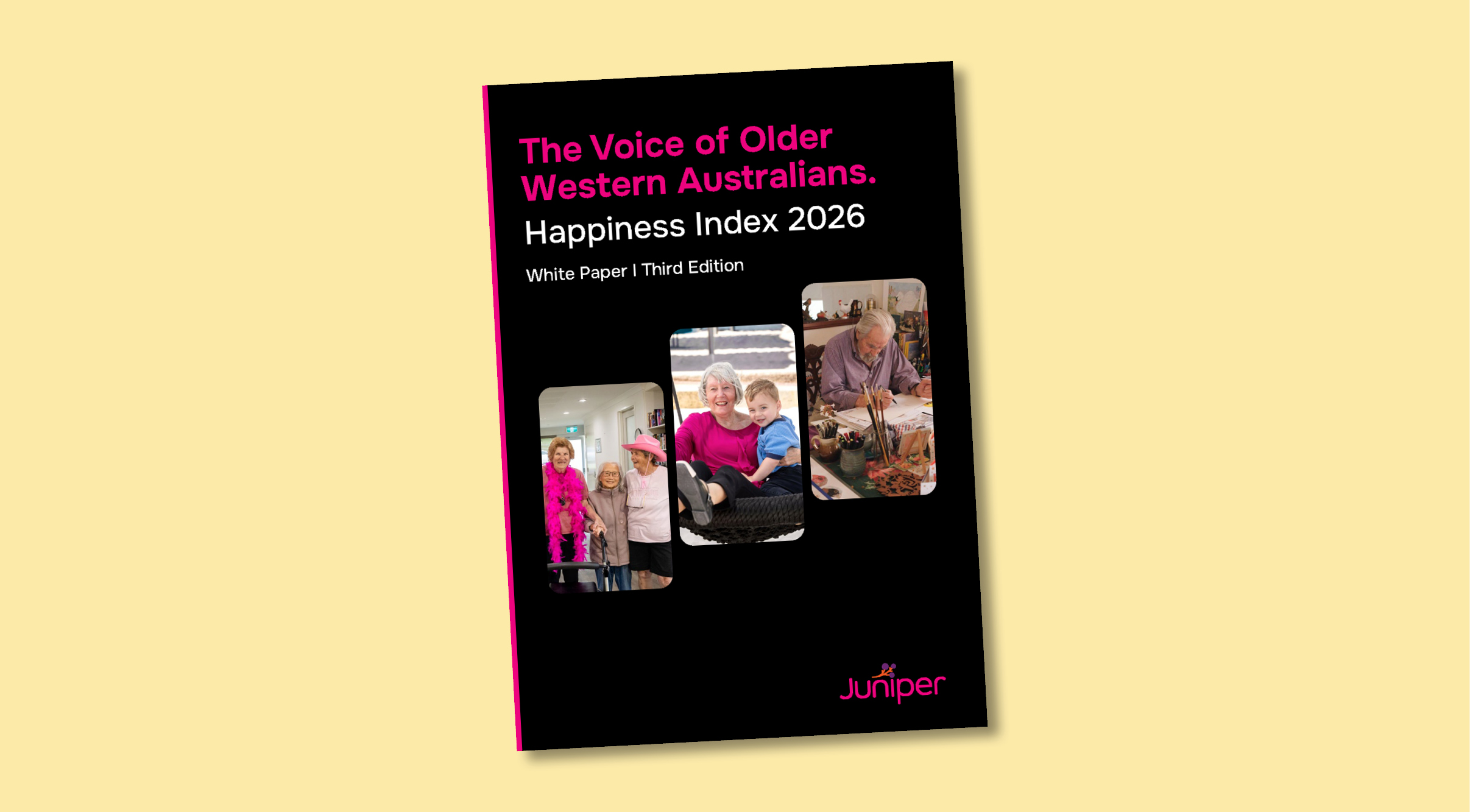
This Seniors Week, Juniper has today released its third annual The Voice of Older Western Australians White Paper revealing while Western Australia’s older population continues to demonstrate resilience and optimism, the foundations that support happiness and wellbeing in later life are beginning to crack. Financial security, social connection, family relationships and sense of purpose have all declined, contributing to a significant fall in overall happiness among older Western Australians.
The latest The Voice of Older Western Australians: Happiness Index 2026 White Paper, independently conducted by CoreData WA on behalf of Juniper, found significant declines in financial security, social connection, family relationships and sense of purpose among Western Australians aged 70 and over.
The findings contributed to the overall Happiness Index falling from 69.5 in 2025 to 64.2 in 2026, marking the first decline in happiness since the research began three years ago. The proportion of older Western Australians who described themselves as extremely happy also dropped sharply from 39 per cent to 27 per cent.
The findings suggest that the decline is not being driven by a single issue. Instead, multiple factors that underpin wellbeing are weakening at the same time, making happiness harder to sustain as people age and placing increasing pressure on the foundations that support happiness.
Juniper CEO Russell Bricknell said the research highlights the need for a broader conversation about healthy ageing.
“Older Western Australians are not asking for more. They’re trying to hold on to the things that matter most: their independence, relationships, connection to community and sense of purpose. The challenge is that the foundations supporting those things are becoming harder to maintain.”
“What this research tells us is that the foundations of happiness are coming under increasing pressure. Cost-of-living challenges, social isolation and uncertainty about support are making it harder for people to maintain the relationships, connections and sense of purpose that help them thrive.”
Foundations of happiness are being eroded
For the first time since the Happiness Index began, financial pressure emerged as the leading barrier preventing older Western Australians from doing the things that make them happy.
Concerns about social connection also increased significantly, reinforcing the growing connection between financial wellbeing, social participation and quality of life.
The research found many older people are making difficult trade-offs, reducing participation in social, recreational and community activities because of rising costs. This creates the risk of a cycle where financial pressure contributes to reduced participation, weaker social connections and declining wellbeing.
Independence and support
The report also highlights a growing tension between independence and support.
Many older Western Australians continue to place a high value on remaining independent, with almost eight in ten concerned about losing their ability to stay in their own home and many expressing concerns about becoming a burden on family members.
However, the research found that a strong desire to remain independent can sometimes result in people delaying support until they reach a crisis point. Respondents reported waiting until health, mobility, confidence, or social connections had deteriorated before seeking help, often making it harder to maintain the independence they were trying to protect.
Russell Bricknell said there remains a common misconception that asking for support means giving up independence.
“One of the biggest misconceptions about ageing is that accepting support means giving up independence. The evidence shows the opposite. The right support at the right time helps people stay independent, connected and living at home for longer.”
“Too often people wait until circumstances have deteriorated before seeking support. By then, opportunities to maintain wellbeing, confidence, and connection may already have been lost.”
The findings suggest earlier access to support could play an important role in protecting happiness and wellbeing in later life. Among older Western Australians receiving home care services, nearly two-thirds said support had improved their happiness, reinforcing the importance of seeking support before challenges escalate.
The support gap
The findings also highlight a growing support gap. Many older Western Australians delay seeking support because they fear becoming a burden, are unsure what help is available, or wait until their circumstances have significantly deteriorated before asking for help.
Mr Bricknell said while the findings paint a concerning picture, they also point to opportunities for action.
The report, themed Protecting Happiness as We Age, argues that improving outcomes for older Australians requires greater focus not only on health and care, but also on the social, financial and community factors that help people live well as they age.
The report calls for greater focus on helping older Western Australians stay connected to their communities, maintain meaningful relationships, plan earlier for ageing and access support before reaching crisis point. Protecting happiness as we age requires strengthening the financial, social and community foundations that enable people to thrive in later life.
Read The Voice of Older Western Australians White Paper 2025 here
Read more about Juniper’s research projects here

 Contact
 1300 313 000